Get in Touch

We would love to hear from you!

Recent posts

Tax Auditors in UAE Having It Good on Jobs, Salary Hikes
Gulf News

Demand Runs High for Auditors, With More Corporate Tax Focused Firms Set For Launch


If anyone asks about the job category with the fastest and highest hiring rates in the UAE, don’t look beyond tax auditors and specialists. The hiring process continues even as the UAE Corporate Tax formally launched on June 1, with industry sources saying there are still more positions to be filled.

Where they are not getting filled internally, businesses are contracting those tasks to outside audit firms, which are expanding their own workforce to cope with the demand rush.

At the manager level, the salary structure for a tax auditor would vary between Dh18,000 to Dh24,000 a month depending on the firm.

Entry level salaries and incentives too have improved in the last 6-8 months, while candidates are lining up 10-25 per cent increases in their take-homes when they make the jump to a new employer.

Hiring in ‘Surge’ Mode


So, is hiring of tax auditors in ‘surge’ mode? Shibu Abraham, Director – Human Resources at the consultancy Kreston Menon, stops short of saying that a surge is on.

“There is demand for qualified and experienced tax consultants and auditors,” he said. “We have seen an increase of 10 percent in our staff strength this year, mostly at entry and mid-level.

“We have a structured career path for auditors, where most of them join as trainees or associates and who over time get promoted to senior auditors, supervisors and managers.”

Audit industry sources say that more specialist tax firms will launch in the coming weeks, and they too will get onto the hiring spree.

“Not every business can afford to have an in-house team of tax specialists, which is why outsourcing offers a big opportunity,” said an auditor.

“These new businesses are either launching on their own and hope to gradually build up a clientele, or opt for joint ventures to speed up the process.”

“Companies are increasingly outsourcing their tax functions to external tax consultants or firms,” said Abraham. “This approach is prevalent among many businesses, especially SMEs that might not have the resources or expertise to handle complex tax matters in-house.”
– Shibu Abraham, Director – Human Resources at Kreston Menon

More Graduates Enter the Fray


It’s also a good time for new tax professionals to seek their chances in a trending job market. This week, Dubai’s DIFC Academy saw the passing out of the first 28 candidates who went through the UAE Corporate Tax Diploma Programme, run in tandem with PwC Middle East. Some of them had already passed the Final Certificate Examination provided by ATT-UK.

Focus on Awareness


At the DIFC Academy, they went through a ‘condensed’ 30-day programme that equips them ‘to guide companies in complying with the new UAE corporate tax requirements’.

That’s exactly what the market wants.

“Finance professionals have gained the practical knowledge and skills to successfully ensure that all practices, systems, and processes of their respective companies comply with the new tax regime,” said Christian Kunz, Chief Strategy, Innovation and ventures Officer at DIFC Authority.

Everyone’s Hiring


“The Big 4 and other top accounting firms are looking for qualified and experienced auditors and tax consultants who can combine tech know-how with their finance and taxation skills,” said Abraham.

“We had seen many individual tax consultants moving to the UAE to capitalize on the opportunities thrown open by the introduction of VAT a few years ago. We have also recently seen the emergence of tax boutique firms.

”Other industry sources say that the current buzz around hiring tax professionals far exceeds anything during the launch of the VAT regime in 2018.

“It will be no exaggeration to say that tax professionals are among the most active when it comes to registering for UAE’s Golden Visa program,” said a consultant. “The rush is unprecedented.”

Is Every UAE Business Up To Speed On Tax?


Registering for the corporate tax UAE continues apace, but there is still time to start the process towards tax filings and making sure the books are in order.

“Companies are increasingly outsourcing their tax functions to external tax consultants or firms,” said Abraham. “This approach is prevalent among many businesses, especially SMEs that might not have the resources or expertise to handle complex tax matters in-house.”

This is why ‘to attract and retain the right talent, there is always a cost involved.”

It’s all showing up in the frenetic hiring in the UAE for auditors. Particularly those who specialise on tax matters.

Source: “More jobs, salary hikes: Is UAE’s demand boom for tax professionals only getting started? ’” by Manoj Nair, Business Editor, Business Section, Gulf News newspaper, 23 August 2023 and online article here.

Read More
RANKINGS REPORT: UAE – Introduction of Corporate Tax Could Lead to Windfall for UAE Accountants
International Accounting Bulletin
The UAE continues to implement regulations and laws that bring its accountancy sector in line with the international community. This is leading to an increase in demand for services overall, while the region is enjoying economic growth.

The IMF expects the UAE’s non-oil economy to grow by about 4% in 2023and accelerate over the medium-term as ongoing reforms are implemented. This figure will make the UAE the fastest growing economy in the Arabian Gulf in 2023. But the UAE’s heavy investment in China’s Belt and Road Initiative, a project that now seems to be faltering, could lead to financial pain. The question is, how much?

In a move that represents a significant shift for a country that’s long attracted businesses from around the world thanks to its status as a tax-free commerce hub, the UAE has introduced corporation tax, which will be applied from June 1st, 2023. 

The country’s statutory tax rate will be 9% for taxable income exceeding 375,000 UAE dirhams ($102,000), and zero for taxable income up to that amount to support small businesses and startups. Individuals will still not be subject to tax on their incomes from employment. real estate, equity investments or other personal income unrelated to a UAE trade or business. The tax also will not be applied to foreign investors who do not conduct business in the country. 

As for what constitutes profit, corporate tax will apply on ‘the adjusted accounting net profit’ of the business. Free zone business, meanwhile – thousands of which exist in the country – can continue to benefit from corporate tax incentives. Companies within the UAE’s many free zones have long enjoyed zero taxes and full foreign ownership, among other benefits. 

There were concerns voiced that the new tax laws would make the country less attractive to businesses, with the threshold for being subject to taxation fairly low. Montenegro and Gibraltar have tax rates of 9% and 10% respectively, while Ireland and Lichtenstein both offer a 12.5% corporate tax rate. Ultimately, the move brings the UAE in line with other competitive economies. 

The new tax laws are expected to result in a boost in demand for accounting services. 

“The accounting industry has been growing stronger over the years since 2017 with the introduction of various regulatory requirements”, said Saju Augustine, Senior Partner at Kreston Menon. “The Excise Tax was introduced in 2017, followed by Value Added Tax (VAT) in 2018, the Economic Substance Regulations (ESR) (2019), Country by County Reporting (CbCr) for large multinational corporates (2019), Beneficial Owner regulations (UBO) (2020), Anti Money laundering regulations (AML) (2021) and recently the Corporate Tax law. The introduction of the above regulations, which are new to the region, made the business houses focus attention on proper accounting and reporting, which led to a demand for accounting professionals.”


However, Augustine pointed out that as the demand grew, more practitioners came into the country from different parts of the world, which led to some negative pressure on the professional fee structures. “Talent sourcing was always a challenge as the expatriates dominate the whole employment landscape,” he said. “India and the Philippines in the east and the UK in the west are the major destinations for recruitment. As the employment opportunities improved in these countries, the inflow of qualified personnel reduced causing a shortage of real talent.”

Accounting and taxation provide a lot more opportunities than in the past. Strict implementation of the anti-money laundering policies provides opportunities for experienced hands in that segment. The Corporate Tax Law requires the taxable person to prepare the financial statements in accordance with accounting standards accepted in the state. “The country does not have its own GAAP and IFRS are most used by businesses in the UAE,” said Augustine. “This provides an opportunity for experts in the field.”

The UAE is also working hard to present the local accounting industry as having the highest ethical code, a move that came months after it removed KPMG from its list of approved auditors. In March 2023, the Abu Dhabi Accountability Authority (ADAA) announced the adoption of ‘Code of Ethics’ based on the standards issued by the International Ethics Standards Board for Accountants. The adoption of the Code will be applicable to accountants and auditors of financial statements from 31 December 2023 onwards. The 2022 Handbook of the International Code of Ethics for Professional Accountants will be fully adopted including all of its provisions and additional requirements. The ADAA is considered the supreme authority that oversees all financial control, accountability, integrity and transparency in the emirate of Abu Dhabi, working directly under the authority of His Highness Sheikh Mohamed bin Zayed Al Nahyan, the President of the United Arab Emirates. 

In November of 2022, it removed KPMG from the list of accountants that have permission to sign companies’ financials in the capital of the UAE. The Dubai Financial Services Authority (DFSA) also imposed a fine of $1.S million on KPMG LLP and $500,000 on its former Audit Principal, Milind Navalkar, for their involvement in the Abraaj scandal, stating that the company failed to follow the appropriate international auditing standards. 

“Had KPMG LLP performed its audit of ACLD to the expected standard, it would have been reasonable to expect it to have identified that, for more than five years ACLD was concealing the true state of its finances from the firm the regulatory agency wrote in its website post. 

The ADAA did not publish the reasons for KPMG’s removal from its list of approved statutory auditors, which is updated every three months. KPMG Lower Gulf said its application to renew its license to carry out statutory audits ‘was returned asking for more information’ and that ‘the recent status change does not affect our current statutory audit engagements.’ ‘We are actively engaging with them to address all technical enquiries: the firm said in a statement, adding that it was committed to.

It is vital that the UAE protects the reputation of its auditors, as Augustine predicts that by the year 2024, corporate tax will be effective on all businesses, and this will give rise to more opportunities for the accounting profession both in terms of jobs and fees. “It’s expected that overall revenue growth in the region will accelerate by 25% to reach 30% in the year 2024, and may stabilise to 10-15% thereafter,” he said.

Consulting services in general are set to boom in the GCC region this year. The Gulf Cooperation Council (GCC) is a political and economic alliance of six Middle Eastern countries-Saudi Arabia, Kuwait, the United Arab Emirates, Qatar, Bahrain, and Oman. Its consulting market is set to cross USD 4 billion in revenues this year, recording a nearly USD 1 billion increase in two years, as regional economies accelerate major transformational projects to support diversification strategies, according to a report written by London-based Source Global Research. According to the report, the revenue of the regional consulting market rose 15.9% year-on-year to USD 3.87 billion in 2022, with all sectors registering double-digit growth. Financial services and public sector consulting advanced by 15.4% annually in 2022. 

While economic forecasts for the region are good, there is one, possibly catastrophic, fly in the ointment. and that is the UAE’s partnership with China. It is heavily involved in China’s Belt and Road Initiative (BRI) and a recent report that showed China has become an international lender of last resort, mostly to ensure BRI projects stay viable. China is now possibly overextended and if it’s creditors cannot cover their loans, the resulting fallout could have a huge effect on global financial stability and China’s biggest partners -like the UAE. 

In 2013, China unveiled a Silk Road plan for the 21st century – a strategy that aims to boost trade and productivity between the country and others across East Africa and Europe. In 2019, UAE confirmed its role as a major player in the megaproject after announcing deals worth USD 3.4 billion had been agreed by the two countries. China is the UAE’s second-largest trading partner, with bilateral trade exceeding USD 64 billion during the first eight months of 2022, a Chinese diplomat told the Emirates News Agency in November 2022. It represents a near 28% increase on the same period in 2021 and by 2030 China has set a target of USD 200 billions of bilateral trade between China and the UAE. 

But a study published in March 2023 shows China granted USD 104 billion worth of rescue loans to developing countries between 2019 and the end of 2021, as its Belt and Road Initiative (BRI) falters. In just three years, China has lent as much in bailouts as it did over the last two decades. The study, China As An International Lender of Last Resort. conducted by researchers at Aid Data, World Bank, Harvard Kennedy School and Kiel Institute for the World Economy, is the first known attempt to capture total Chinese rescue lending on a global basis. Authors of the study have claimed that this is strategy to rescue China’s own banks. It is a an extremely risky one and if China gets it wrong, global financial stability could suffer as a result. 

There have been concerns in the past about China’s own SRI debt levels and China now seems to be overextended as a lender. Back in 2010, only 5% of China’s overseas lending portfolio supported borrowers in financial distress. Today, that figure stands at 60%. 

As the UAE continues its reforms, it shows itself to be even more welcoming to the international community, a prospect that can only lead to increased demand for its accountants. It can only be hoped that China’s gamble pays off and the BRI does not come crashing down, bringing the UAE and other major partners with it.
Read More
The Growing Importance of the UAE – Indonesia Trade Relations
Erwin Winata, Group Managing Partner - Kreston Indonesia

The trade relationship between the UAE and Indonesia has been growing steadily in recent years. In terms of bilateral trade, the UAE is one of Indonesia’s largest trading partners in the Middle East. Historically, the UAE has been a major importer of Indonesian palm oil, jewelry and precious stones while Indonesia imports petroleum products, petrochemicals, non-alloy steel and machinery from the UAE.

The UAE – Indonesia CEPA

The UAE – Indonesia Comprehensive Economic Partnership Agreement (CEPA), the bilateral free trade agreement was signed with the aim to increase trade and investment between the two countries. The Agreement was signed in the presence of Joko Widodo, President of Indonesia and His Highness Sheikh Mohamed bin Zayed Al Nahyan, President of the UAE in July 2022.

According to the UAE Minister of State for Foreign Trade HE Dr. Thani bin Ahmed Al Zeyoudi, the trade pact would create 55,000 highly skilled jobs in the UAE and add about $4.6 billion to the GDP as the exports are estimated to increase by $3.2 billion and the imports by $2.6 billion by 2030.

Under the UAE – Indonesia CEPA, both countries will eliminate or reduce tariffs on a wide range of goods and services. This will make it easier and economical for businesses in both countries to trade with each other. Under the far-reaching trade deal, over 80 percent of UAE exports will gain immediate duty-free access to Indonesia. The agreement also includes provisions for the protection of intellectual property rights, the promotion of e-commerce, and the facilitation of investment.

The UAE and Indonesia are both important economies in their respective regions and the CEPA is expected to strengthen their economic ties. The agreement is also significant as it is the first trade agreement between the UAE and a Southeast Asian country.

Both countries have been engaging in various initiatives and business forums to promote trade and investment. There have been visits by high-level delegations from both countries, business expos, and joint investment projects in sectors such as infrastructure, energy, tourism, and agriculture.

Kreston Indonesia

Hendrawinata Hanny Erwin & Sumargo (HHES) also known as Kreston Indonesia, is the Indonesian member of Kreston Global, one of the largest accounting networks in the world. Founded in 1992 by chairman Hendra Winata, HHES has evolved from one Partner’s firm into a firm with more than 23 Partners and Directors supported by a dedicated team of more than 300 professionals.

Headquartered in Jakarta, HHES has three regional offices in the major cities of Medan, Surabaya and Batam offering wide range of services including Audit & Assurance, Advisory, Outsourcing, IT consulting and Corporate & Personal Tax services.

Kreston Indonesia, as a Top 10 accounting firm in Indonesia, provide professional services to local and multinational companies, State Owned Enterprise, and Public Listed Companies from the Pharmaceutical, Plantation, Mining, Manufacturing and Hospitality industries.

Kreston Indonesia and Kreston Menon have agreed to support their clients and potential investors to explore the vast investment and business opportunities available in both countries.

Kreston Asia Pacific Conference 2023

Strengthening collaboration between Kreston Global’s member firms in the dynamic Asia Pacific Region is the key agenda that will be addressed at the 2023 Kreston Asia Pacific Conference in Bali from July 27-29, 2023. Kreston Indonesia is honored to be the host of the first in-person conference in this dominant region since 2019.
Read More
Navigating ESG Trends in Banking: SLLPs, ESG Assessment, and Managing ESG Risk
Prashanth Joseph, ESG Domain Consultant - Impact Grows

As the world’s economy continues to face increasing environmental, social and governance (ESG) risks, the banking sector has had to adapt by integrating ESG considerations into its lending and investment practices. This shift towards sustainable finance has given rise to new trends, such as sustainability-linked loan products (SLLPs), ESG assessments of portfolios and the evaluation of ESG risks of banks and their customers. In this article, we’ll explore these trends in more detail and explain what they mean for the banking sector.
Read More
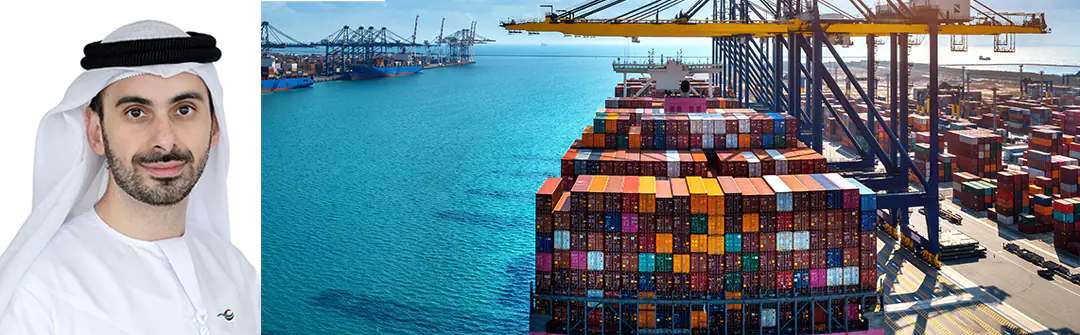
JAFZA ‘Open For Business’: Empowering Dubai’s Economic Growth
Abdulla Al Hashmi, Chief Operating Officer, Parks and Zones, DP World UAE
Dubai’s thriving economy owes its success to a long-term commitment to diversification, constant innovation, and an enabling business environment. The emirate’s strategic investments in sectors such as trade and logistics, among others, have made it a global hub for commerce.

All thanks to its forward-looking government policies, investor-friendly environment, access to foreign talent and efficient banking system, the emirate continues to outperform other leading economies.

Recently, Sheikh Mohammed bin Rashid Al Maktoum launched The Dubai Economic Agenda ‘D33,’ an ambitious plan with a target of achieving AED 32 trillion in economic targets over the next ten years. The agenda’s focus areas include trade, transport, manufacturing, technology, and tourism, which DP World will contribute to through the Jebel Ali Free Zone (Jafza) and the Jebel Ali Port. As one of the largest free zones globally, Jafza has been a significant driver of Dubai’s economic growth, attracting over 9,500 companies, including more than 100 Fortune 500 companies from over 140 countries. Jafza’s tax-free environment, streamlined regulatory processes, and world-class infrastructure make it an attractive investment destination. Jafza is also a leading source of FDI inflow to Dubai, making it a key player in ensuring the success of the D33 strategy.

Creating a Sustainable Economy

Progress here shows no sign of stopping and new programmes have been put in place to continue to create an attractive environment for businesses. To build on the consistent economic progress and developments in the emirate, D33 will focus on increasing foreign trade, attracting more foreign direct investment (FDI) and enhancing Dubai’s global ranking.

In our opinion, D33 is a strategy that will genuinely strengthen the foundation of Dubai’s sustainable economy. Through the Jebel Ali Free Zone (Jafza) and the Jebel Ali Port, we at DP World will significantly contribute to all the goals and aspirations of D33’s focus areas, namely Trade, Transport and Manufacturing, among others.

The agenda also seeks to add 400 cities as key trade partners and enhance existing foreign trade relations with Africa, Latin America, and Southeast Asia through the Dubai Economic Corridors 2033 initiative. We in DP World are integrating our assets globally to provide end-to-end supply chain solutions for our customers. We have launched trade bridges between UAE-India, UAE-Africa and more to connect Dubai to several cities globally, with the sole objective of enhancing Dubai’s market access to the world.

Enabling Global Connections

As a globally renowned trade hub, Jafza is well-known for its multimodal logistics that offer connectivity through sea, air, and land. This unique factor has played a key role in supporting our success as a trade hub. The free zone also gives customers access to a vast network of international markets, enhancing their reach and helping them target newer markets. All thanks to our strategic location at the crossroads of major trade routes between Asia, Europe, and Africa. These factors make Jafza an attractive destination for companies looking to establish regional and global control towers, manufacturing hubs, and regional distribution centres.

Coupled with this, our proximity to the Jebel Ali Port is another major advantage. The port provides customers with direct access to more than 80 weekly services. On-site logistics facilities, including warehouses and distribution centres, also help in streamlining the movement of goods in and out of the free zone.

Strong transportation links also help create an attractive environment for businesses. Dubai’s geographical location is serviced through two airports – with Jafza having proximity both to Dubai International Airport and Al Maktoum International Airport. Our customers benefit greatly from a dedicated sea-air customs bonded corridor that facilitates the transport of goods to these airports within 45 minutes of discharge, providing them fast and easy access to a vast network of international flight routes to all parts of the world. Back on the ground, the established road network also connects customers to every emirate in the UAE and international highways to Oman and Saudi.

Additionally, the trade bridges established between DP World and vital trade markets in the Middle East, Africa and South Asia regions, serve as a massive advantage for Jafza customers, offering them easy, seamless, and undisrupted opportunities to carry out import and export operations through the removal of tariffs and technical barriers (TBT).

Innovative Trade Solutions

Strengthen Dubai’s status as global tech hub and fostering an ecosystem of innovation is another objective of D33. Together with Jebel Ali Port, Jafza is well-equipped in this regard. Our customers in the free zone and port have access to the latest technologies and cutting-edge infrastructure to stay ahead of the competition. They can also benefit greatly from pioneering solutions developed and introduced by DP World such as:

  • BoxBay is an intelligent High Bay Storage (HBS) system located at Jebel Ali Terminal 4. Capable of storing containers up to 11 stories high, the system delivers the capacity of a conventional terminal in a third of the surface area. It is fully automated, offering access to each container, and eliminating unpaid and unproductive reshuffling. BoxBay brings significant gains in handling speed, energy efficiency, and safety, as well as a reduction in operating costs. After a successful pilot in Jebel Ali, the Pusan terminal in South Korea will be the world’s first to implement the BoxBay system.
  • CARGOES TOS+, a fully automated terminal operating system located at Jebel Ali Port’s Container Terminal 3, is a significant step in the smart transformation of port and logistics operations. Offering solutions for remote control of port facilities, the system can integrate CT3 with terminals that use the same automation system, assuring sustained operations and smooth trade flow.
  • Dubai Trade is a single-window platform for cross-border trade and is accessible to all Jafza companies. In addition to a paperless approach to trading operations and payments, the platform ensures 24/7 access to over 700 e-services to ensure seamless trade processes for users.

We are certain that D33 will usher a new phase of development for Dubai. We are proud of the role we played over the last three decades in making Dubai the undisputed regional gateway for the region, and we are confident that we will contribute positive to reinforce and grow Dubai’s position by actively participating in achieving the D33 strategy.

Related Links: Read more about our Business Advisory services or download our ‘Doing Business in Dubai‘ publication.
Read More
UAE Corporate Tax Pertinent Questions – All You Need To Know
Ravishanker V, Director - Taxation, Kreston Menon

Background


According to the UAE Federal Decree-Law No. 47 of 2022 on taxation of corporations and businesses (UAE CT Law), businesses will become subject to Corporate Tax UAE (CT) from the beginning of their first financial year which starts on or after 1 June 2023. Executive Regulations of the Decree Law containing interpretations and implementation guidelines of the Articles are forthcoming from the Ministry in the form of various Cabinet Decisions.

A few key areas have been reproduced below.

Registration of Taxable Persons


Who is liable to register for UAE CT Law?

All Taxable Persons (Persons subject to CT), including Free Zone Persons and Taxable Persons eligible for Small Business Relief are liable to register for UAE CT Law. It has been clarified by way of various Decisions that the following Persons need not register under UAE CT Law:

  • A Government Entity
  • A Government Controlled Entity
  • A Person engaged in Extractive Business
  • A Person engaged in Non-Extractive Natural Resources Business
  • A Non-Resident Person that derives only State Sourced Income and has no Permanent Establishment in the UAE
  • A Natural Person deriving income less than AED 1 million from Business or Business Activities
When can one register for UAE CT?

The Federal Tax Authority (FTA) is adopting a staggered approach with respect to registration. In early January, the FTA launched an early bird registration drive for CT through the EmaraTax platform. Subsequently, The FTA vide a press release on 14 May 2023 has announced the launch of registration for CT for Public Joint Stock Companies and Private Companies from 15 May 2023.

It should be noted that the Frequently Asked Questions (FAQs) published on the website have clarified that taxpayers are required to register before the prescribed due date of the first CT return without any penalties.

Tax Period


What is my first Tax Period?

For the purposes of the UAE CT Law, the Tax Period is the Financial Year of a Person which shall be the calendar year or the 12-month period for which the Taxable Person prepares financial statements.

The Decree Law applies to all financial years commencing on or after 1 June 2023. For most businesses, the financial year commences either on 1 January or 1 April. Accordingly, a bulk of the first tax years would either be

1 January 2024 to 31 December 2024, or 1 April 2024 to 31 March 2025, respectively. Further, the due date of filing returns is within 9 months from the end of the tax period i.e., 30 September 2025 and 31 December 2025, respectively.


Can a Taxable Person change their Tax Period?

It has been clarified by a recent decision that the Taxable Persons are eligible to change their Tax Periods for extending the same to up to 18 months or shortening the same to 6 to 12 months subject to meeting specified conditions.

Qualifying Free Zone Persons (QFZPs)


What are the conditions under which a Free Zone Person qualifies to be a Qualifying Free Zone Person (QFZP)?

A Free Zone Person who meets the pre-conditions for availing of the incentive mentioned under the law is termed QFZPs.

The pre-conditions to be regarded as a QFZP include:

  • Maintaining adequate substance in the UAE.
  • Complying with the transfer pricing requirements
  • Electing not to be taxed under the normal UAE CT regime i.e., at 9%.
  • The QFZPs would incur 0% UAE CT on ‘Qualifying Income’ and 9% on ‘Non-Qualifying Income’.
What is Qualifying Income?

While the term ‘Qualifying Income’ is expected to be clarified in specific regulations, the overview of the Decree published in the UAE Government Portal indicates that all income earned by the Free Zone Person which is in compliance with the restrictions on business by the Free Zone Authority particularly on transactions with the Mainland could constitute ‘Qualifying Income’.

Are there special considerations that are likely to apply to QFZPs?

It may also be noted that since the QFZPs are eligible for a tax incentive, the FTA is likely to monitor the returns and documents of such taxpayers closely. Accordingly, despite payment of Nil tax, there would be a need to maintain adequate documentation. Further, it has also been clarified that all QFZPs, irrespective of turnover, must maintain audited financial statements.

Small Business Reliefs


Are there special measures that have been introduced for small businesses including startups?

Resident small businesses having an annual revenue of less than AED 3 million in the relevant tax period or any preceding tax periods can avail themselves of Small Business Relief (SBR). Under this relief, such Taxable Person can elect to be treated as not having any Taxable Income. It may be noted that this relief is available for financial years commencing from 1 June 2023 and continues for subsequent tax periods ending up to 31 December 2026. Further, it may be noted that such relief is not available for a QFZP or a component of a Multinational Enterprises Group i.e a group with a consolidated revenue of more than AED 3.15 billion.

Are there any disadvantages of claiming such relief?

The Taxable Person claiming SBR would not be eligible to carry forward unclaimed interest costs or taxable losses in such tax periods where SBR is availed. Accordingly, it is pertinent to evaluate the claiming of this relief holistically and not in isolation.

Are there reliefs provided for small businesses with respect to Transfer Pricing (TP)?

By way of a recent Ministerial Decision, the requirement for maintaining a Master file and a Local file has been restricted to the following category of Persons:

  • Component of a Multinational Enterprises Group that has a total consolidated revenue of AED 3.15 billion or more in the relevant tax period; or
  • A Taxable Person whose revenue in the relevant Tax Period is AED 200 million or more.

This provides significant relief to small businesses with regard to the maintenance of extensive TP documentation. However, it may be noted that the requirement for application of the Arm’s Length Principle would continue to be applicable to international as well as local controlled transactions for all Taxable Persons.

Are there reliefs provided to small businesses pertaining to Accounting Standards and methods of accounting?

In a recent decision, relaxations have been granted to small businesses with regard to the Accounting Standards and method of accounting wherein a taxable person whose revenue does not exceed AED 3 million is allowed to maintain accounts on a cash basis and a taxable person whose revenue does not exceed AED 50 million may apply IFRS for SMEs.

Tax Grouping


What is a Tax Group?

A UAE CT Tax Group, in short, can be constituted by two or more resident juridical persons (other than a QFZP or an Exempt Person) having a parent-subsidiary relationship with at least 95% shareholding and control among other criteria. The conditions for UAE CT Tax Grouping are very different from tax grouping provisions available under UAE VAT Law wherein entities under common ownership, even if the shareholders are natural persons, are eligible to be grouped.

Is a Tax Group the same as a Qualifying Group?

The CT Law introduced two distinct grouping structures – ‘Qualifying Group’ and ‘Tax Group’. A fine reading of the relevant provisions identifies the following differences:

  • While a ‘Qualifying Group’ is a de-facto status i.e., requires no application or election, a ‘Tax Group’ can be formed only through an application to the FTA.
  • A qualifying group may also be constituted even if the common shareholder is an individual. The Tax Group can only be constituted of Juridical Persons.
  • The constituents of the qualifying group will continue to be different taxpayers and file separate returns which will be assessed separately. In the case of a tax group, the ‘Parent company’ files one return on behalf of the group i.e., the group is assessed as a single entity basis consolidated financial statements.
  • The basic exemption of AED 375,000 will apply to the tax group as an entity and not to each of its components.

Key Business Considerations


What are the key areas of the UAE CT Law that businesses will have to consider in their day-to-day operations and for making long-term strategic decisions?

CT, unlike VAT, would have a direct effect on the profits of the businesses and requires due consideration. Further, being a new introduction, the Decree Law also would introduce new concepts which would mandate businesses to recalibrate their traditional business practices.

The businesses should take due cognizance of the following major aspects introduced by the Decree and closely monitor the developments in these areas:

  • Conformity to OECD Transfer Pricing (TP) guidelines for transactions with related parties and connected parties, including capturing the same in the opening balance.
  • Maintenance of records supporting the information provided in the returns.
  • Evaluation of any arrangement or agreement in the light of the General Anti-Abuse Rules (GAAR) prescribed by the Decree.
  • The provisions relating to Place of Effective Management, Permanent Establishment or State Sourced Income may result in a business falling within the purview of this Decree, even if registered outside the UAE.
  • Careful evaluation of various elections or applications prescribed under various provisions.
Are further decisions awaited from the Ministry and/or the Authority?

While a large trench of clarifications has been received over the last few weeks, the impending Cabinet Decision and regulations can add new requirements and provisions leading to multiple new interpretations and discussions.

A few key clarifications that are expected from the Ministry include:

  • Specific requirements and format of documentation for transfer pricing.
  • Definitions and procedures associated with QFZPs.
  • Penal provisions and quantum of such penalty.
  • Formats for annual returns, applications, and other statements.

Conclusion


UAE has always been known for its ease of doing business and business friendly ecosystem. The introduction of CT is a radical change, albeit essential. Apart from the effect of the additional expenditure in the Income Statement, the businesses are also concerned about the burden of compliance that they would be expected to bear.

The inclusion of provisions facilitating seeking clarifications from the FTA indicates the commitment of the Ministry and the Authority in undertaking this radical change in partnership with all the stakeholders, including all the taxpayers. This is a source of massive reassurance to the taxpayers


Read More
whatsapp